


Thriving in a Disruptive World: Rethinking Global Health Politics and Diplomacy
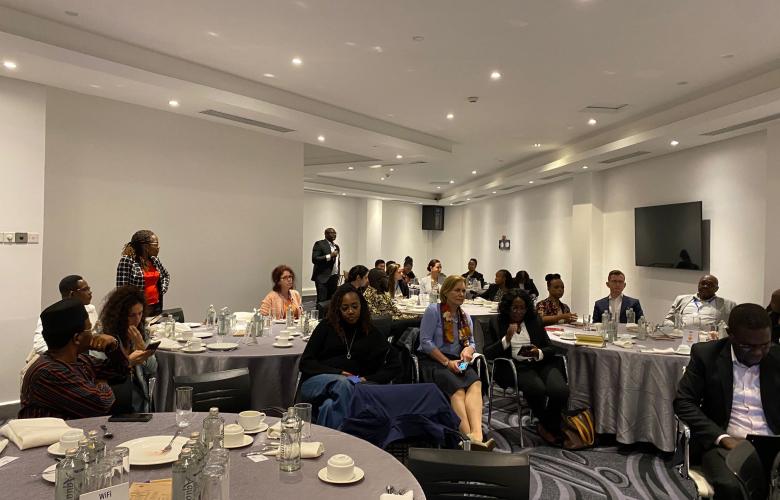
On the sidelines of this year’s World Health Summit Regional Meeting in Nairobi, Global Health Otherwise Media and The Partnership for International Politics and Diplomacy for Health hosted an interactive breakfast discussion centred on key skills emerging leaders need to thrive in the rapidly evolving global health landscape.
Shifts in health financing, power distribution and disease burden are reshaping international cooperation for health. This context creates an opportunity and imperative to reimagine health diplomacy.
More than 50 participants joined us for a morning of open exchange and insights sharing. A central theme emerged: the world is changing, and while past experience remains valuable, new skills and approaches are needed to navigate today’s geopolitical and economic climate.
Throughout the discussion, it was clear that health is not a purely technical or clinical, but an inherently political issue. Therefore, all actors navigating the interface between health and politics are, in effect, health diplomats.
Participants emphasised the need to close the gap between science and politics through stronger communication and framing of scientific evidence. While the global health community was considered strong on technical expertise, it is often less skillful in conveying expert knowledge in ways that resonate with decision-makers. Evidence alone does not drive political action, making it crucial to break down data into clear, accessible, and politically relevant takeaways. Another recommendation was to better leverage media as a powerful tool for influence, while being mindful of its disruptive consequences as a potential source of misinformation. Overall, effective communication in health diplomacy meant simplifying messages without losing on substance, as well as tailoring them to different audiences.
At the same time, navigating the current landscape requires a much deeper understanding of politics and political processes. There was a shared sense that success in health diplomacy depends on engaging with, rather than avoiding, political realities. This includes recognising that not all health issues are equally politically attractive, and that decisions are shaped by competing priorities, timing, and power dynamics, not just quality of evidence. Participants highlighted the importance of identifying windows of opportunity, sequencing conversations, and translating health issues into the language of economics, security, and development.
Finally, the discussion underscored the central role of relationships, trust, and informal processes in health diplomacy. In participants’ experience, many of the most consequential decisions were not made in formal settings, but through informal exchanges; over a shared meal, in small forums, or through long-standing professional networks. Building and maintaining these relationships over time is critical, as major results often emerge from sustained engagement and behind-the-scenes dialogue rather than a single decisive moment. Therefore, health diplomats must be able to navigate both formal and informal spaces, work across sectors and cultures, and build coalitions that bridge governments, regional institutions, civil society, and the private sector. In an increasingly complex world, the capability to collaborate, adapt, and draw on diverse perspectives was deemed as important as technical competence itself.
The discussion concluded by identifying 2026 as a year of both opportunity and hard work. There is strong interest in cultivating these skills and putting them into practice, alongside a sense of optimism that they can strengthen international cooperation for health.
The meeting was moderated by Luchuo Engelbert Bain (Global Health Otherwise Media) and Anders Nordström (The Partnership for International Politics and Diplomacy for Health), who were joined by speakers Marleen Temmerman (Director of the Centre of Excellence in Women and Child Health, Aga Khan University); Nicaise Ndembi (Deputy Director General, Regional Director, IVI Africa Regional Office); Rispah Walumbe (Head of Strategy, Policy and Institutional Performance, Amref Health Africa); Tiruneh Baye (Technical Officer, Africa CDC); Nelson Otieno (Director Health Equity, Astra Zeneca); and Jenni Martin (CEO, Menstrual Rights Global).