


Accra Reset's High-Level Panel Report on GHA Reform is Now Published
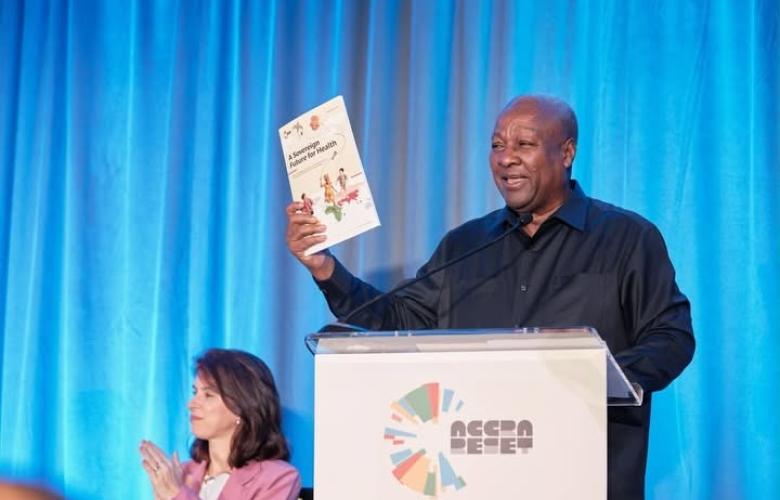
On the sidelines of the 81st Session of the UN General Assembly, President Mahama of Ghana and the Chancery of the Accra Reset convened an event titled Full Circle: Resetting Global Development.
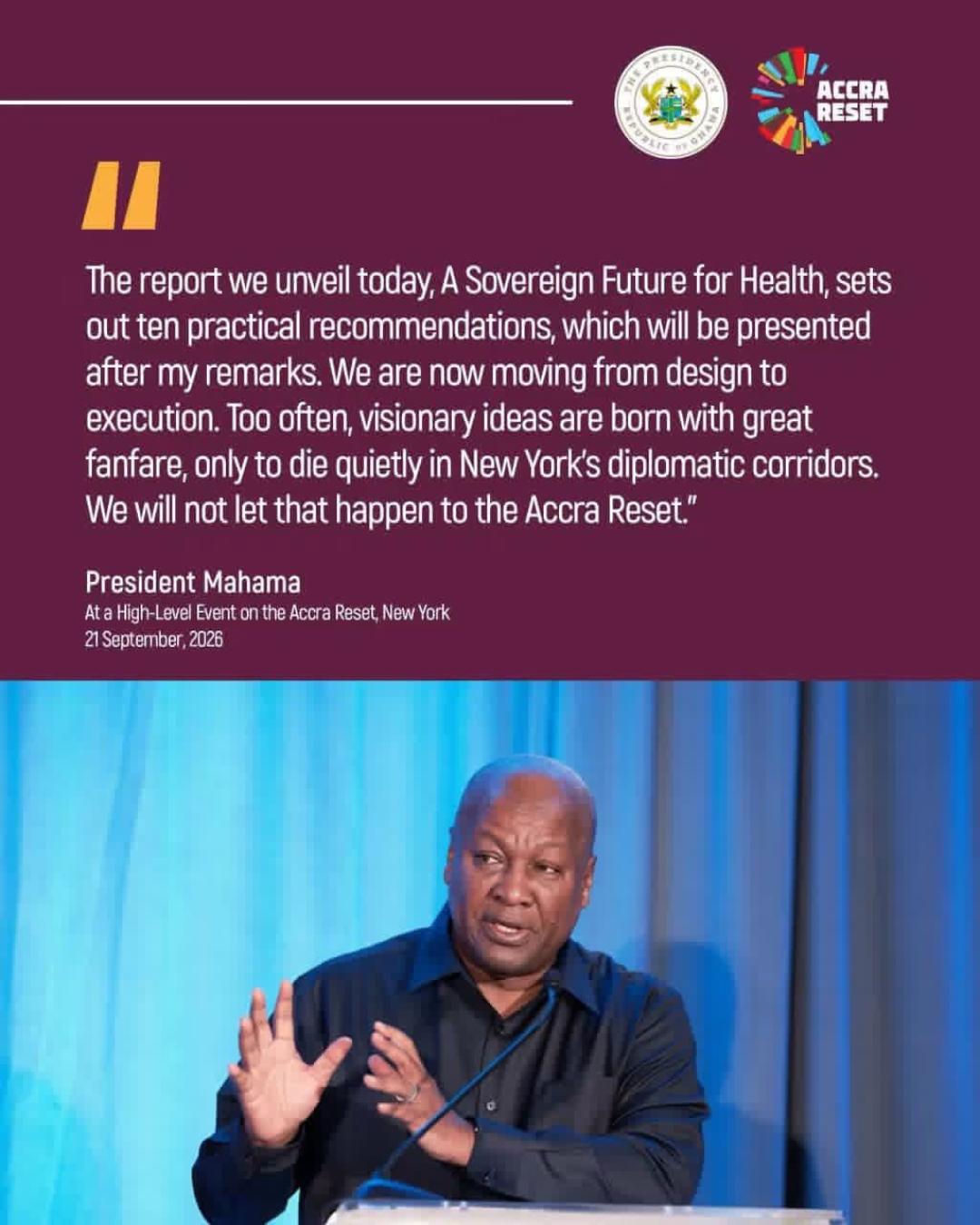
This gathering marked one year since the Accra Reset was launched, with health chosen as the first sector in which sovereignty models are being developed and championed.
The much-anticipated report by the Accra Reset's High-Level Panel on Reform of the Global Health Architecture and Governance was unveiled during the event.
The report reflects five political shifts:
- From Nominal Country Ownership Towards Practical Sovereignty
- From Aid-Centred Cooperation to Sovereign Partnership
- From Regional Coordination to Collective Power
- From Institutions First to Functions First
- From Self-Reporting to Independent Accountability.
The shifts are followed by ten reform recommendations spanning national, regional and global health governance, with the overarching goal of improving health of populations around the world.
In particular, the Reset calls for:
- Establishing a one-stop country compact under national leadership, with international partners aligned behind it, including global health institutions and multilateral banks.
- Building health sovereignty primarily on domestic resources.
- Equipping regional institutions with the authority and member state financing needed to fulfil their mandates in line with the principle of subsidiarity.
- Refocusing global cooperation on the provision of global public goods, enabled by non-aid financing.
- Reforming global health institutions through the 4Cs pathway:
Commit: Political commitment from key stakeholders, with countries committing to increasingly take responsibility for financing their own health systems, and international partners fully aligning with the one-stop country compact.
Collaborate: Closer collaboration between institutions, including through co-located Board meetings, shared back-office functions and a single country interface.
Consolidate: Functions with a continuing global purpose brought under consolidated governance (a ‘holding company’ model).
Close: Diligently planned wind-down of functions no longer needed at the global level.
The primary focus of the Panel’s work have been five major global health institutions which account for the largest flows of funds and commodities, and many of the burdensome processes experienced at country level: Gavi, the Vaccine Alliance; the Global Fund to Fight AIDS, Tuberculosis and Malaria; the Global Financing Facility (World Bank); the Pandemic Fund; and Unitaid.
The Panel recognised that a differentiated approach will be needed for fragile and humanitarian contexts.
The report concludes by advocating for an independent accountability mechanism under the Presidential Council to track progress on the Accra Reset agenda.
We are delighted that Gunilla Carlsson, Co-Director of the Partnership for International Politics and Diplomacy for Health, has served on this Panel, alongside esteemed colleagues and under President Mahama’s inspiring leadership.
The bold reform options outlined in the report now ought to be driven and operationalised by countries, though their implementation will require engagement from stakeholders across the international system for health.
Taken together, these proposals aim to elevate country leadership, advance sovereignty, realign transnational cooperation around shared priorities, and ensure that a fairer and more equitable system delivers for decades to come.
The Partnership supports this direction and looks forward to continued discussions and action on global health reform.